- >
- Blog
- >
- The boating season has started thanks to ADE actuators
The boating season has started thanks to ADE actuators
Date: 3 July 2026
Reading time: 4 minutes
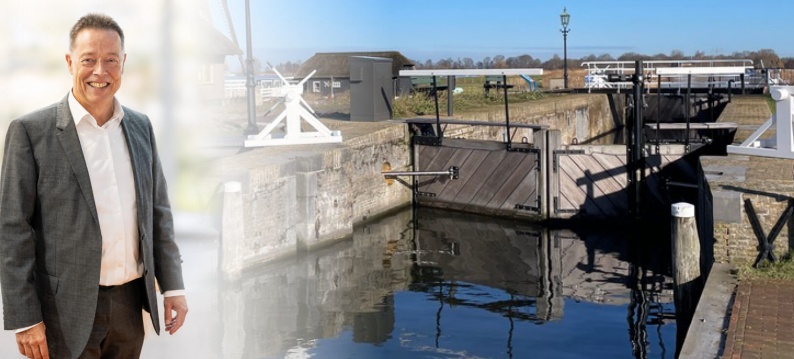
The renovation of Zevenhuizer Verlaat lock was recently completed, with ATB Automation supplying electromechanical actuators from ADE-Werk. At first glance, this may seem like a fairly straightforward project, but in practice it included several special characteristics. What makes it so interesting? I’m happy to explain.
About Zevenhuizer Verlaat lock
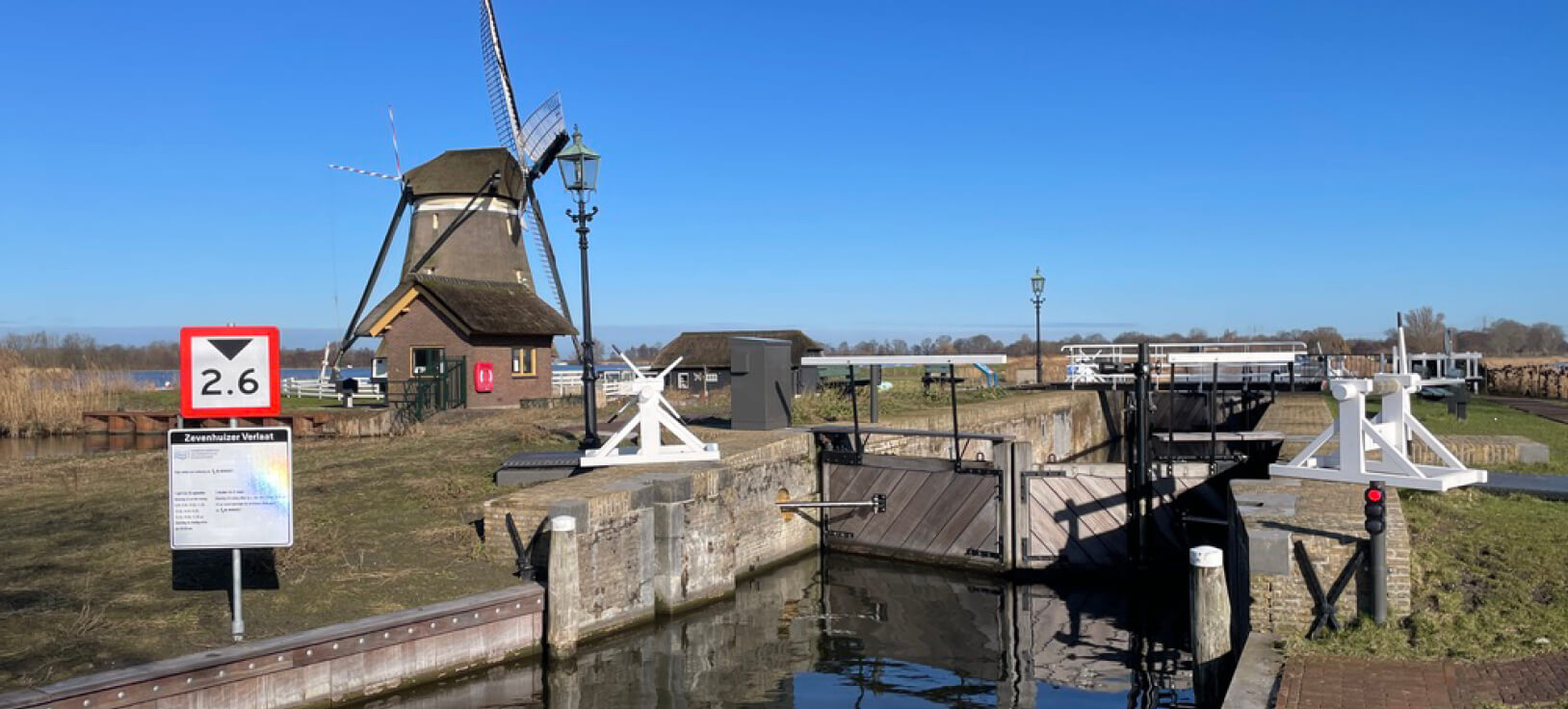
Zevenhuizer Verlaat lock connects the Rottemeren lakes with the Hennipsloot canal. The lock is part of a recreational boating route and forms the inland waterway between Rotterdam, Gouda and the Hollandsche IJssel. It is a navigation lock with mitre gates, used to equalise the water level so boats can pass through safely.
It is worth mentioning that the lock had been in use for a long time and, until recently, was operated entirely by hand. The request from the Hoogheemraadschap van Schieland en de Krimpenerwaard was therefore clear: how can we convert this lock into an electrically driven and automatically operating system that is also easy and safe for recreational boaters to use?
Why was the lock modified?
The installation of ADE actuators was part of large-scale maintenance, during which several components of the lock were renovated. The previous manual operation caused practical limitations, both in terms of convenience for passing boaters and control over the operating process. The aim was therefore to properly address three key requirements:
- Electrification of the drive
- Safe operation in a public environment
- The ability to monitor the lock remotely.
Based on this request, we were involved at an early stage to help assess the best solution for the drive system.
What changed technically?
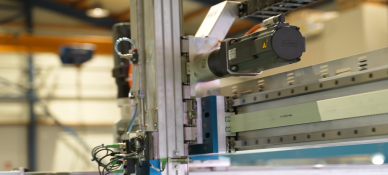
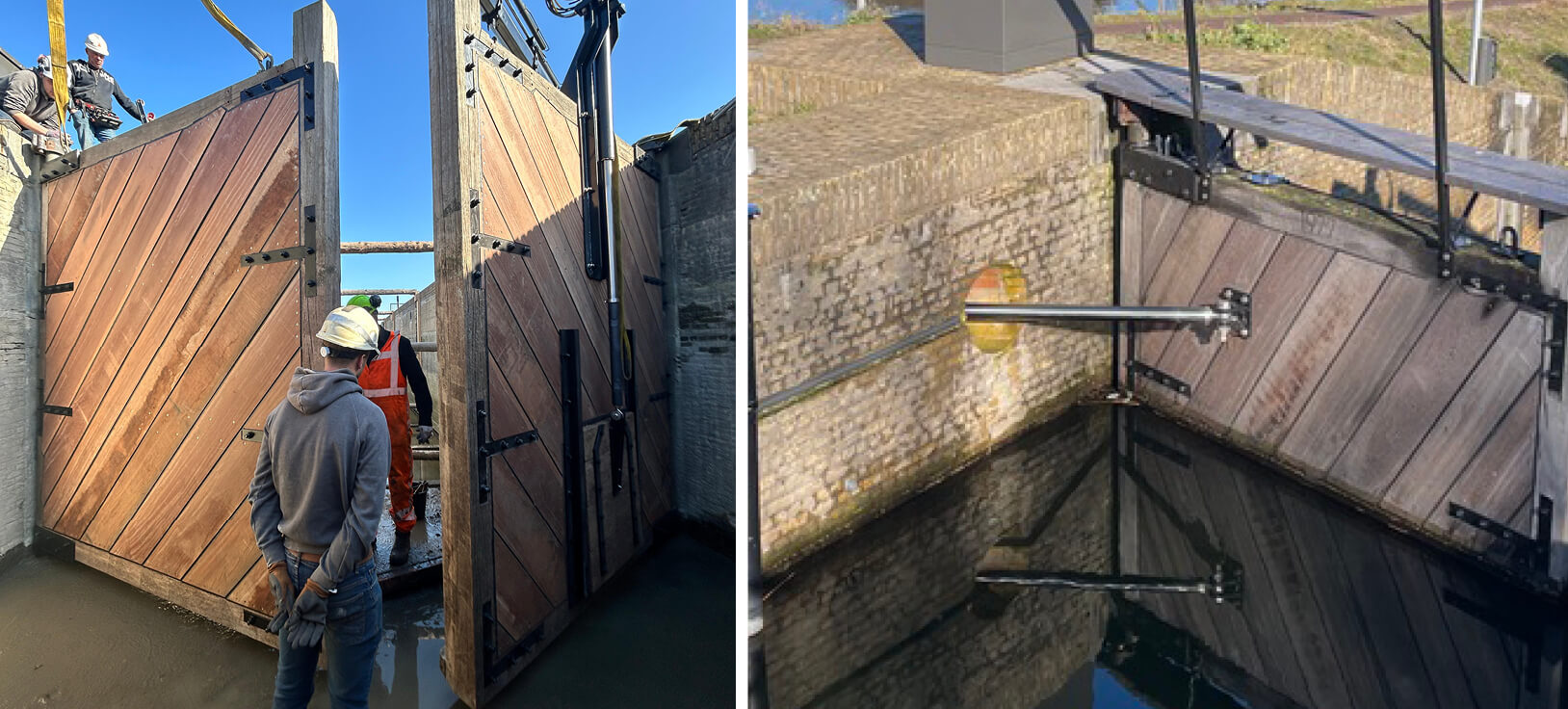
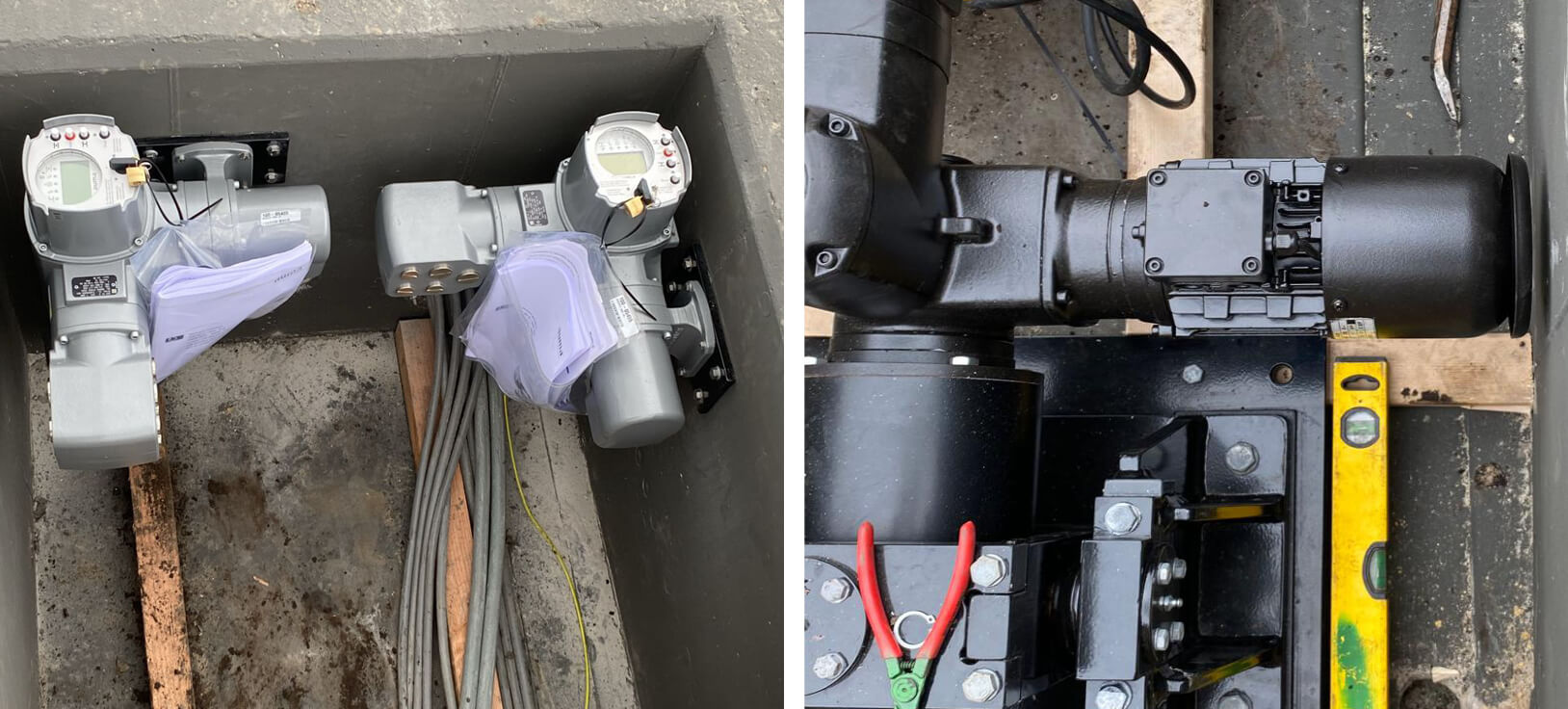
The most important step in this project was the transition from manual operation to electromechanical drive technology. ADE-Werk actuators were selected for the movement of the gates and sluices, allowing the lock to be operated at the push of a button. For users, the process remains simple. Behind the scenes, however, the system has been completely redesigned. The opening and closing sequence is fixed in the control system, ensuring that the water level is regulated in a controlled way. This is essential for a navigation lock.
Improved safety
Safety plays an important role at this lock. The location is freely accessible and situated near a marina, with passing boaters operating the lock themselves. This means that the system must take account of situations that cannot be fully controlled.
An example is a blockage in the movement of a gate or sluice, which in practice can already be caused by debris such as a piece of wood. The ADE actuators are therefore equipped with torque limitation. This stops the drive as soon as a preset force is reached. Without this limitation, the actuator would continue to push, potentially causing damage to the installation.
When the limit is reached, the movement stops and a notification is sent to the water authority’s control room. The situation can then be assessed. Another important aspect in projects like this is that no hydraulics or oil are used, preventing any risk of water contamination.
"Many of the questions that arose during this project had already been addressed in previous projects. We bring that experience and knowledge into every new project."
Operation and monitoring in practice
The lock can still be operated by passing boaters themselves. This was a deliberate choice. The difference lies in what happens after someone presses the button. The system ensures that all steps are carried out in the correct sequence.
At the same time, the water authority can monitor the system remotely. Notifications are automatically sent when something deviates from normal operation, making management much more transparent.
What stood out to me in this project
What I particularly like about this renovation is that the technical modification was quite significant, while the nostalgic appearance of the lock has largely remained unchanged. The surroundings also play an important role: the lock is located in a characteristic area with plenty of water, greenery and a windmill nearby. This is not a place where you want to change everything completely.
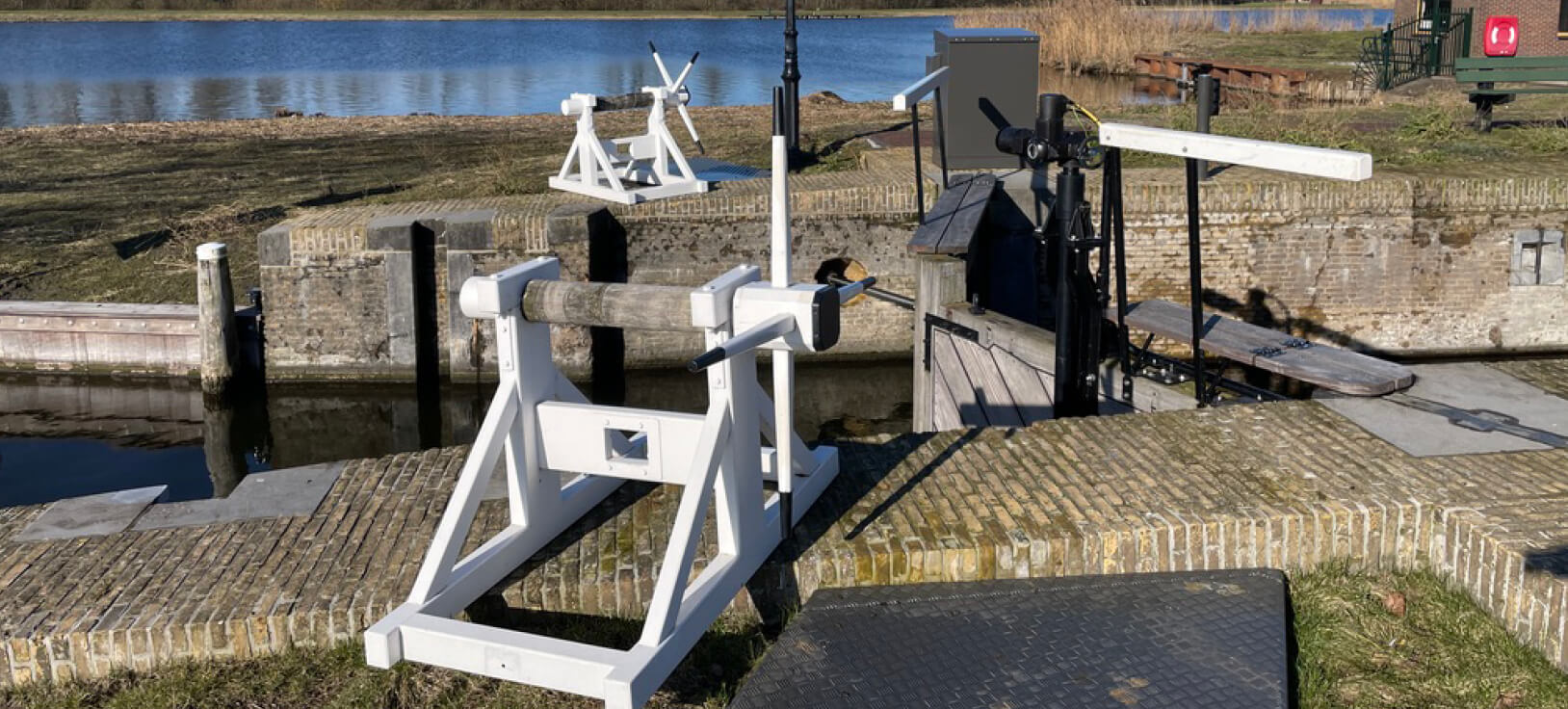
A nice detail is that the old manual operating mechanism has been given a place on the quay, keeping the history of the lock clearly visible.
Collaboration and experience
Projects like this show how important experience is. Many of the questions that arise during such a project are familiar from earlier projects, such as the locks at Hekendorp and Oudewater. By applying this knowledge, the possibilities of an electromechanical drive can be integrated appropriately at an early stage.
In this case, it resulted in a solution that matches the requirements of the water authority and the way the lock is used.
Back in operation for the boating season
Over the past decades, ATB Automation has equipped many bridges and locks in the Netherlands and Belgium with ADE actuators. Every project has its own character, ranging from very large locks for commercial shipping to monumental bridges and locks for recreational use. That is what makes each project challenging in its own way.
And of course, it is especially nice to mention that this project was completed in time for the boating season, resulting in happy faces on the passing boats. That is a great result!
Placed by: Robert Vermoolen
Robert Vermoolen has been working as a sales engineer at ATB Automation since November 2009 and is the point of contact for Torriani, Rosta, Tandler, ADE and NEFF, among others.
0 comments

 NL
NL FR
FR EN
EN